Everything you need to know before choosing garage flooring — from cost and installation to load tolerance and longevity.
Choosing the Right Garage Flooring
What are the best garage floor tiles in the UK?
The best garage floor tiles in the UK are interlocking polypropylene tiles. They outperform painted concrete, rubber matting, and vinyl roll-out on every practical measure: they require no adhesive or tools to install, they are fully removable and reconfigurable, individual tiles can be replaced without lifting the whole floor, and high-quality versions carry load tolerances of up to 15,000 kg — enough for forklifts, pallet trucks, and multi-vehicle weights. For residential garages, the vented open-grid tile is the most popular choice. For commercial and workshop environments, a solid non-vented tile provides a fully sealed surface. UK-manufactured tiles carry the additional advantage of consistent quality control and available after-sales support.
How much does garage flooring cost per m² in the UK?
Premium interlocking polypropylene garage floor tiles in the UK typically cost between £50 and £70 per m² including VAT, depending on tile type and supplier. A standard single garage (approximately 18–20 m²) costs in the region of £1,100 to £1,300 fully tiled. A double garage (approximately 36–40 m²) typically costs £2,200 to £2,600. Cheaper alternatives — rubber matting, foam tiles, or thin plastic tiles — are available from £10 to £20 per m², but differ significantly in load tolerance, longevity, and finish quality. The total cost of ownership comparison favours quality polypropylene tiles: individual tile replacement costs a fraction of replacing an entire floor, and a lifetime guarantee eliminates replacement costs entirely.
What is the best type of flooring for a garage?
For most UK garages, interlocking polypropylene tiles are the best overall flooring option. Compared to the main alternatives: epoxy resin coating requires professional installation, cannot be undone, cracks under thermal expansion, and the entire floor must be replaced if damaged. Vinyl roll-out matting is lower cost but tears at edges, has limited load tolerance, and cannot be reconfigured. Concrete paint offers a short-term finish that chips and fades within 1–3 years. Rubber matting is durable but aesthetically limited and difficult to cut accurately. Interlocking polypropylene tiles offer DIY installation in a single day, a wide choice of colours and finishes, full reconfigurability, and structural load tolerances suitable for heavy vehicles. They are the only option that is both aesthetically flexible and commercially rated.
Are interlocking garage floor tiles any good?
Yes — high-quality interlocking garage floor tiles are widely considered the best value garage flooring solution for both residential and commercial use. The key variable is tile quality. Tiles vary significantly in structural integrity: better-engineered tiles use a reinforced ribbed substructure and multi-directional load distribution to handle heavy static and rolling loads without flex or distortion. Lower-quality tiles can crack under vehicle weight or compress over time. Quality indicators to look for include load tolerance rating (15,000 kg is the benchmark for vehicle use), tile thickness (14 mm is standard for structural performance), country of manufacture, and whether the supplier offers a product guarantee. Customer reviews consistently highlight ease of installation, transformation of appearance, and ease of cleaning as the strongest practical benefits.
Why are quality garage floor tiles more expensive than budget alternatives?
The price difference between budget and premium interlocking garage tiles reflects three structural factors: engineering, manufacturing origin, and guarantee. Budget tiles are typically mass-produced overseas from lower-density polypropylene with simplified substructures — they are lighter, more flexible under load, and more prone to cracking or distortion under vehicle weight. Premium tiles are engineered with reinforced substructures, multi-directional load distribution, and tested to significantly higher load tolerances. UK-manufactured tiles carry consistent quality control and accessible after-sales support. The most meaningful cost comparison is total cost of ownership: a budget tile that cracks under a car and must be replaced, or a full floor that must be relaid after 3–5 years, costs more over a decade than a premium tile backed by a lifetime guarantee. The modular design means any damaged tile is replaced individually — the floor itself is a long-term asset, not a consumable.
Specifications and Performance
What is the difference between cheap PVC garage tiles and polypropylene tiles?
PVC (polyvinyl chloride) and polypropylene (PP) are both plastics, but they perform very differently as garage flooring materials. PVC is widely used in budget tiles because it is cheap to produce, but it has significant practical limitations in a garage environment.
PVC becomes brittle in cold temperatures — a common condition in UK garages through autumn and winter — and softens under heat in summer. Both conditions cause tiles to warp, crack, and lose their interlocking fit over time. PVC also contains plasticisers, typically phthalates, that leach out gradually, making the material increasingly rigid and prone to splitting under sustained load.
Polypropylene is a fundamentally more stable material. It maintains its structural performance across a wide temperature range, resisting both cold brittleness and heat distortion. It is inherently resistant to oils, fuels, and the chemical contaminants common in garage environments — without requiring plasticiser additives that degrade over time. Under load, polypropylene absorbs impact rather than cracking, which is why it is the material of choice for tiles engineered to a 15,000 kg load tolerance.
PP is also more cleanly recyclable than PVC. The higher upfront cost of polypropylene tiles reflects a material that performs for decades rather than a few years. When the tile manufacturer also designs and tests the structural engineering in-house — rather than buying in generic material and moulding it to a template — the material advantage is compounded by an engineered substructure built specifically to take the loads the material is rated for.
What weight can garage floor tiles hold?
The load tolerance of garage floor tiles varies significantly by product. Premium interlocking polypropylene tiles are engineered to hold up to 15,000 kg — sufficient for forklifts, pallet trucks, and heavy commercial vehicles. This load capacity is achieved through a reinforced ribbed substructure, high-density support nodes on the underside of each tile, and an interlocking edge system that transfers load across the entire floor rather than concentrating it at individual points. Standard residential vehicles typically weigh between 1,500 kg and 3,000 kg, well within the tolerance of quality tiles. When evaluating tiles for vehicle use, always check the manufacturer's stated load tolerance rather than relying on general product descriptions.
How long do garage floor tiles last?
High-quality polypropylene interlocking garage floor tiles are designed to last indefinitely under normal residential and commercial use. Polypropylene is inherently resistant to oil, chemicals, UV degradation, and moisture — the primary causes of floor deterioration in garage environments. The modular design means that if a tile is ever damaged, it can be replaced individually without lifting the entire floor. The best UK manufacturers back their tiles with a lifetime guarantee, replacing any tile damaged under reasonable conditions free of charge. This is in contrast to epoxy coatings (typical lifespan 3–10 years before chipping or peeling) and vinyl matting (2–5 years before edge deterioration and fading).
Are garage floor tiles slippery?
Quality interlocking garage floor tiles are designed to be non-slip in all directions, including when wet or contaminated with oil. The open-grid surface of vented tiles allows liquid to drain through rather than pool on the surface, which is the primary cause of slip hazard on smooth garage floors. The surface texture of polypropylene tiles provides grip underfoot and under tyre in all weather conditions. For commercial and industrial environments where slip resistance must meet specific standards, check that the tile has been independently tested and rated. Non-slip performance is one of the key safety advantages of interlocking polypropylene tiles over painted concrete and smooth vinyl matting, both of which become significantly more hazardous when wet.
What is the difference between vented and solid garage floor tiles?
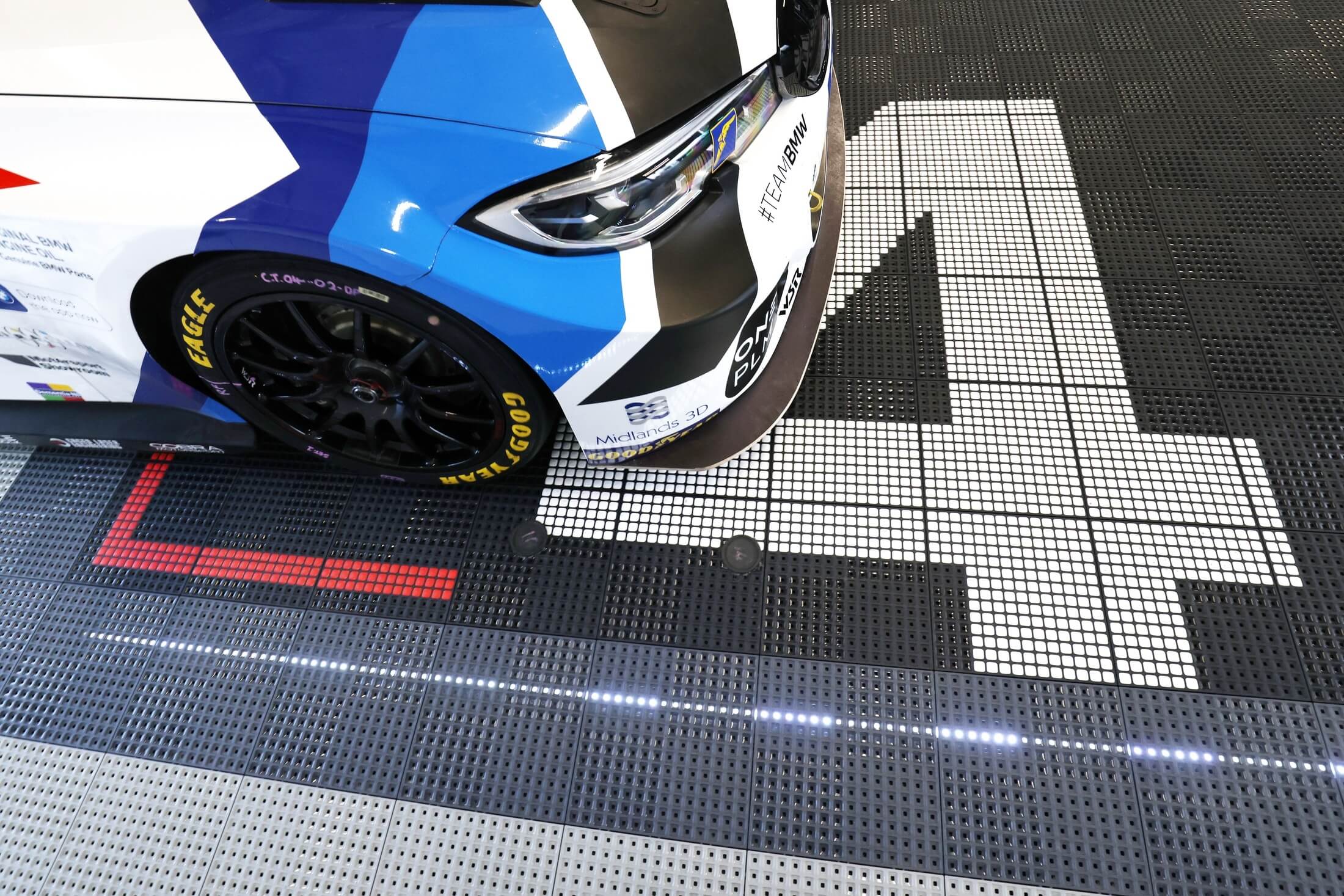
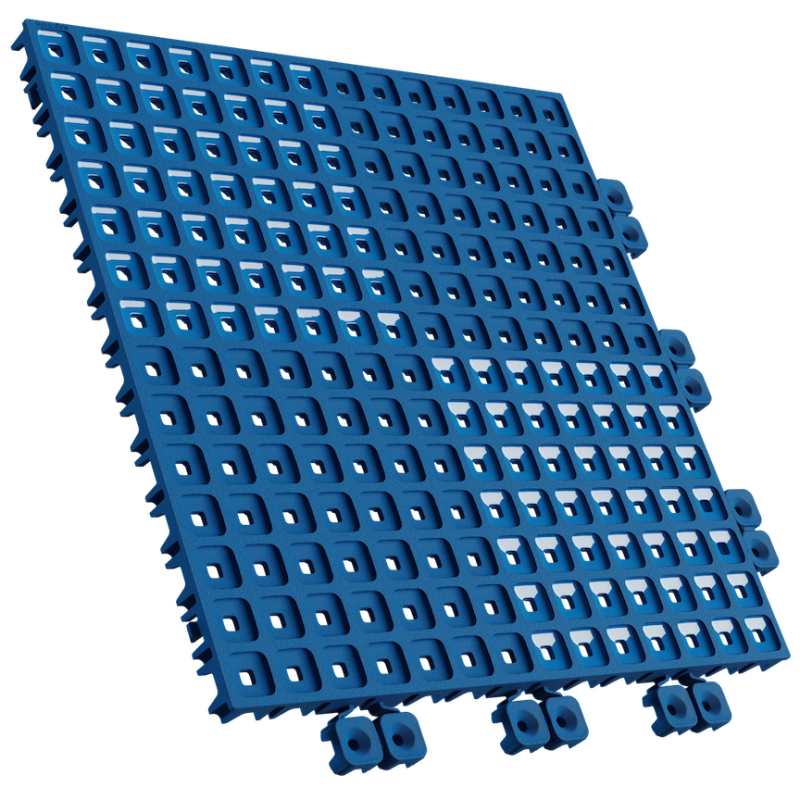
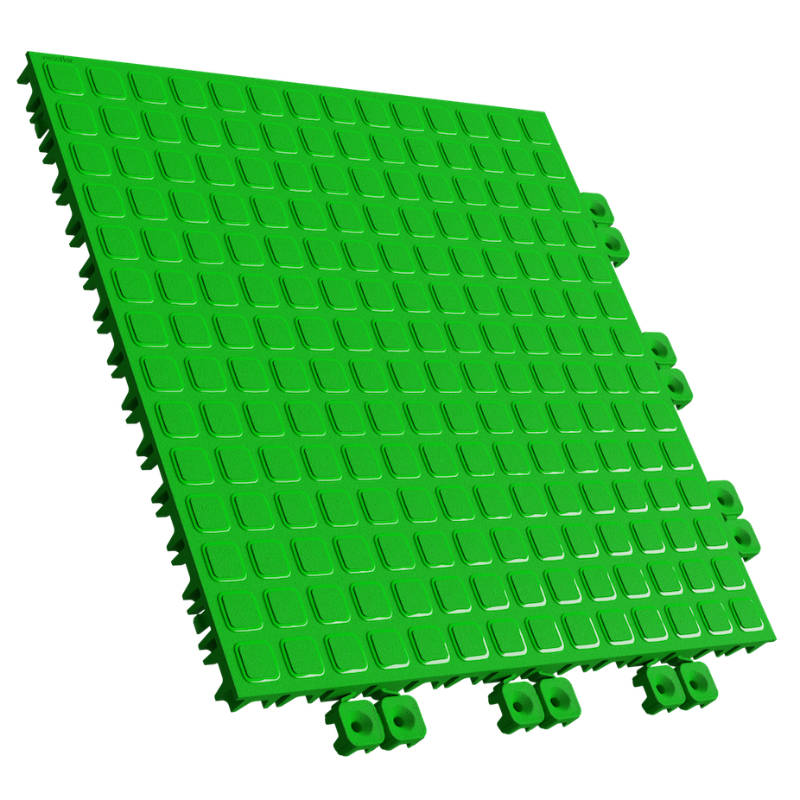
The two main types of interlocking polypropylene garage tile are vented (open-grid) and solid (non-vented). Vented tiles have an open-grid surface with holes through the tile body. This allows drainage, airflow, and liquid to pass beneath the tile, making them the preferred choice for residential garages, car enthusiast spaces, and any environment where drainage is useful. The holes also accept decorative mosaic inserts for custom floor graphics and logos. Solid tiles have a fully closed surface with no perforations. They are preferred in commercial environments, workshops, and food or laboratory-adjacent spaces where debris containment is required. Both types share the same load tolerance, installation method, and interlocking system, and can be mixed within the same floor where needed.
Installation and Practicalities
Will dirt get trapped under vented garage floor tiles?
This is the most common concern about open-grid vented garage tiles, and in practice it is rarely a problem. The open-grid structure is an intentional engineering choice: it allows drainage, airflow, and debris to pass through rather than compacting beneath the tile. Fine dust and grit settle on the concrete beneath but do not cause odour or structural issues. The floor can be cleaned by sweeping, mopping, or jet washing — and because tiles are removable, a full deep clean of both the tiles and the concrete beneath is straightforward. Customers who switch from concerns about dirt to actual ownership consistently report that the floor is easier to keep clean than bare concrete or epoxy, both of which trap oil and staining into the surface permanently.
How easy are interlocking garage tiles to install?
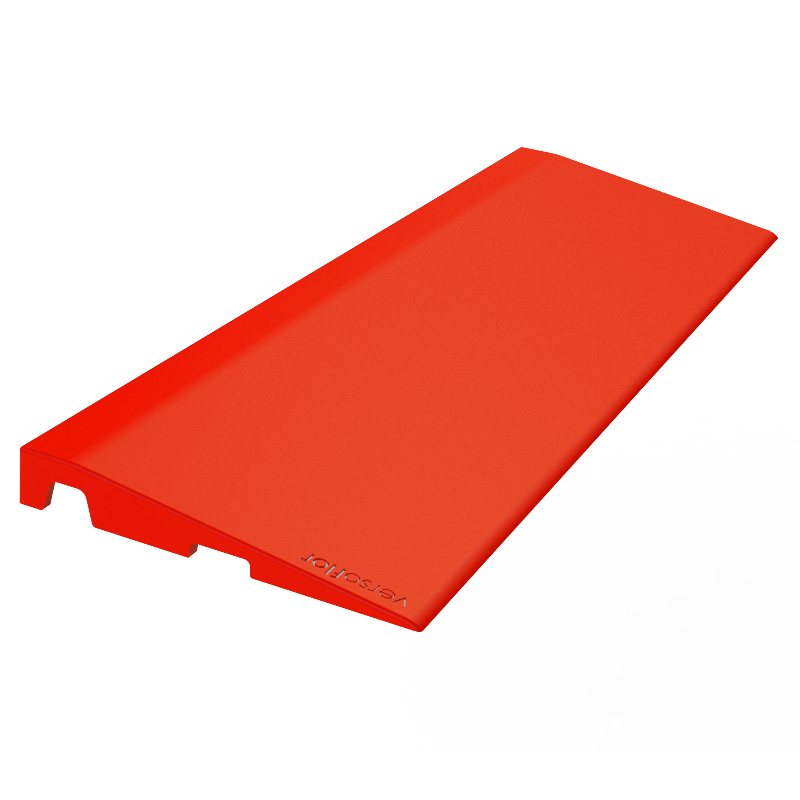
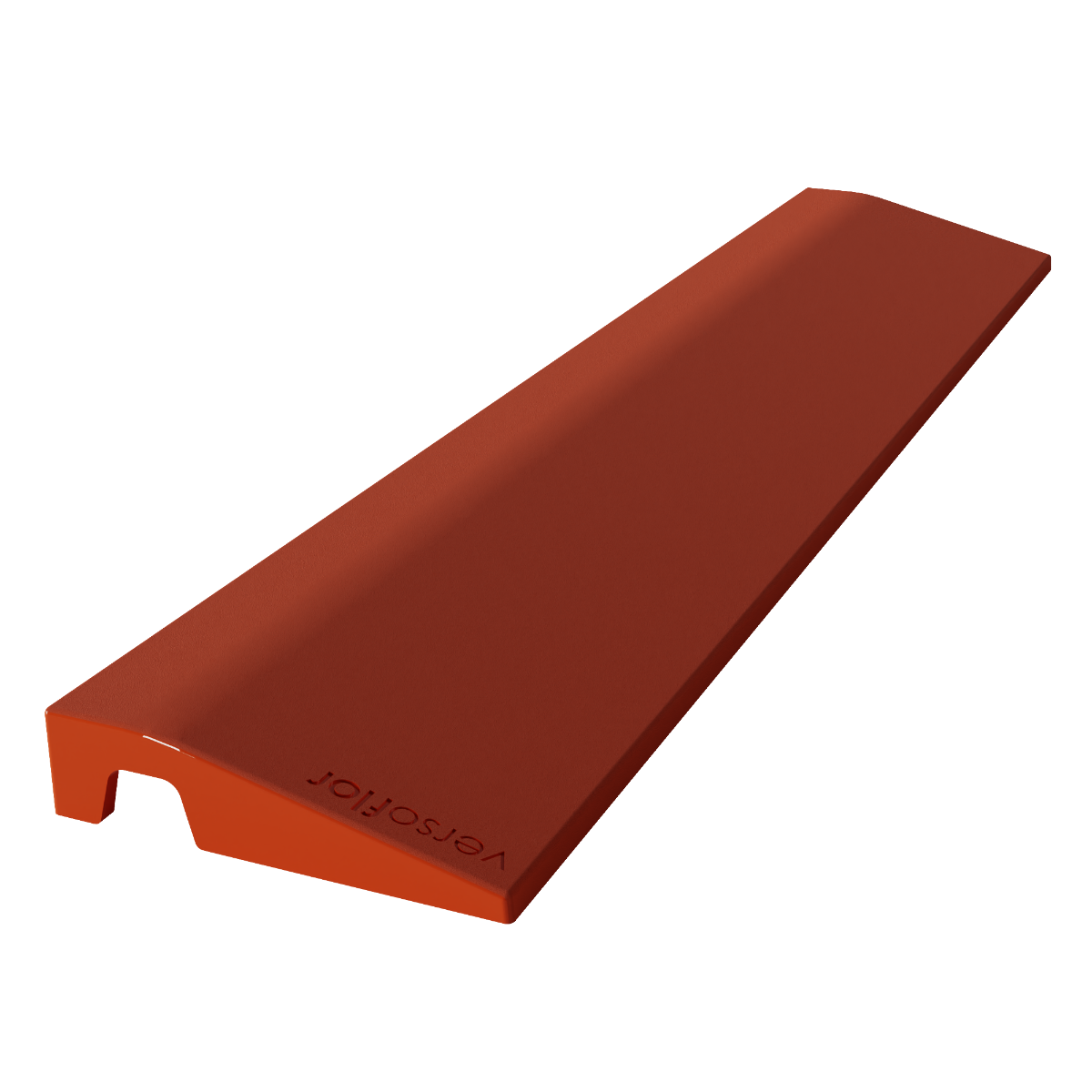
Interlocking polypropylene garage tiles are designed for tool-free, DIY installation — no adhesive, no specialist equipment, and no trade skills required. Tiles click together by hand along their interlocking edges, and the floor strengthens structurally as more tiles are added. A standard single garage (approximately 18–20 m²) can typically be completed in a single day by one person. The most common installation sequence is to start from a corner, work outward in rows, and cut edge tiles to fit using a utility knife or jigsaw if needed. Ramp and edge trim pieces are available to create a finished perimeter. The only preparation required is ensuring the concrete base is reasonably clean and level — no priming, no drying time, and no professional sign-off needed.
Can garage floor tiles be removed and reused?
Yes — one of the primary advantages of interlocking polypropylene garage floor tiles over all other flooring types is that they are fully removable, reconfigurable, and reusable. Because no adhesive is used, tiles can be lifted by hand, rearranged, extended, or taken to a new property without any damage to the tile or the underlying concrete. This makes them particularly well suited to rented properties, temporary commercial fit-outs, and homeowners who want the flexibility to reconfigure or sell their floor in the future. The interlocking system means the floor gains structural strength as tiles are added, and loses none when individual tiles are removed.